Exhibition organized with the National Library of France
Six months before he died in poverty and forgotten, Jean-Jacques Lequeu donated one of the most singular and fascinating graphic oeuvres of his time to the French National Library.
The set of several hundred drawings presented here in its entirety for the first time, is a testimonial to the solitary and obsessive downward spiral of an exceptional artist that goes well beyond the first steps of an architectural career. Using the precise technical tool represented by the geometric working drawing made in wash, which he filled with handwritten notes, Lequeu scrupulously described the monuments and imaginary factories that filled his imaginary landscapes, rather than carrying out projects. But this initiatory journey, which he made without leaving his studio and enriched with figures and narratives
from his library, this pathway that led him from temple to bush, from artificial grotto to palace, from kiosk to subterranean labyrinth, resolved itself as a quest to find himself. To see everything and describe
it all, systematically, from the animal to the organic, from fantasy and raw sex to the self portrait, became the mission he assigned to himself.
As a typical representative of the artisanal class that tried, with the Enlightenment and the French Revolution, to rise socially and break free of the world of trades, but quickly became disenchanted when the
new order and new hierarchies were built, Lequeu, the child of his century, the century of licentiousness and Anglo-Chinese gardens, nevertheless pursued an entirely free and singular path. Reduced to
employment in a subordinate office, ignored by those in place, now far from his roots, but freed of social or academic pressure, he stalked his dreams with the obstinacy of a builder and without compromise.
CURATORS:
Laurent Baridon, Professor at University of Lyon II; Jean-Philippe Garric, Professor at University of Paris 1 Panthéon-Sorbonne ;
Martial Guédron, Professor at the University of Strasbourg; Corinne Le Bitouzé, General Curator, Deputy Director of the Department of Prints and Photography at the French National Library; Christophe Leribault, Director of the Petit Palais
-

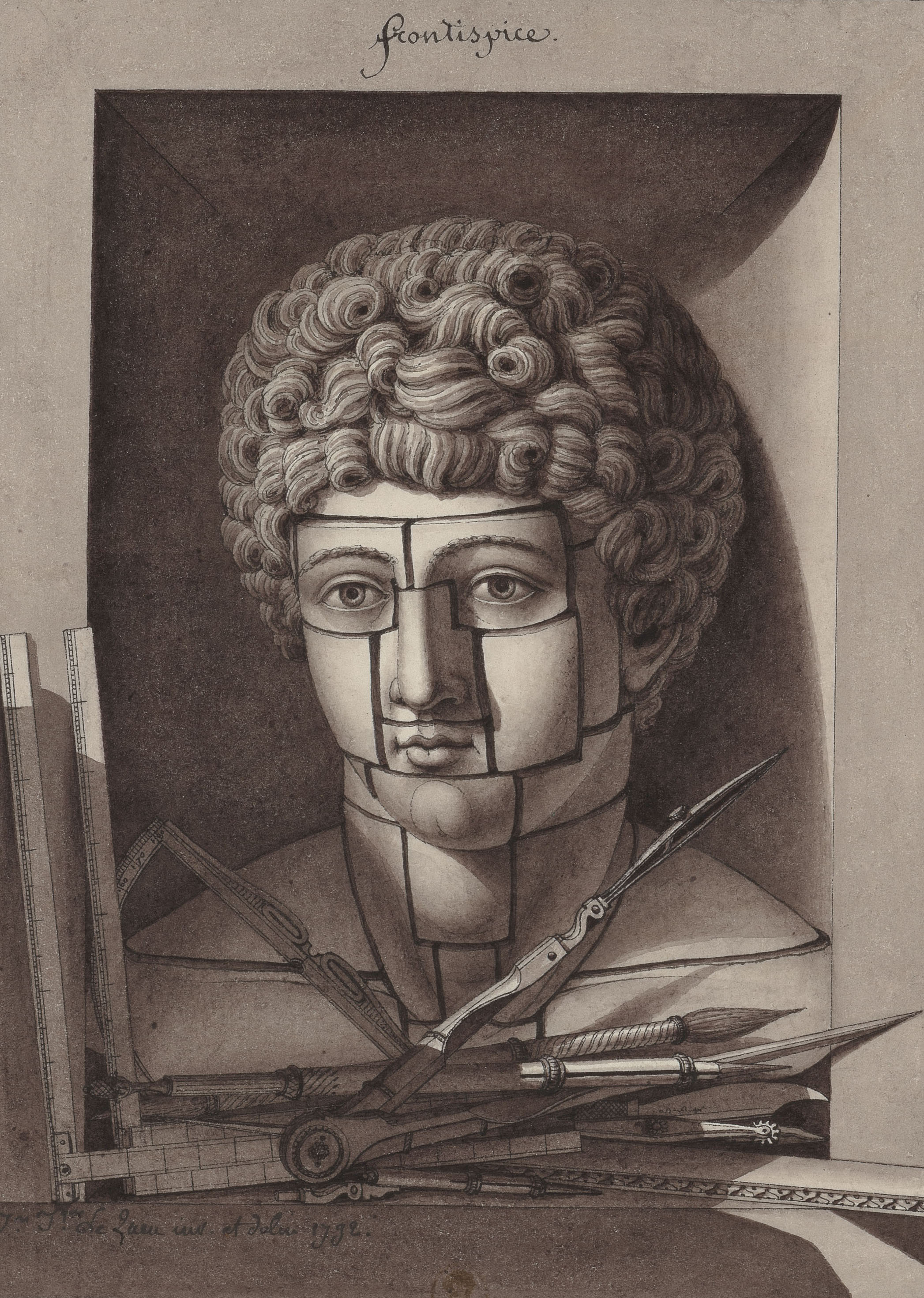
Frontispice de la Nouvelle méthode appliquée aux principes élémentaires du dessin. BnF, département des Estampes et de la photographie.Jean-Jacques Lequeu
BnF -

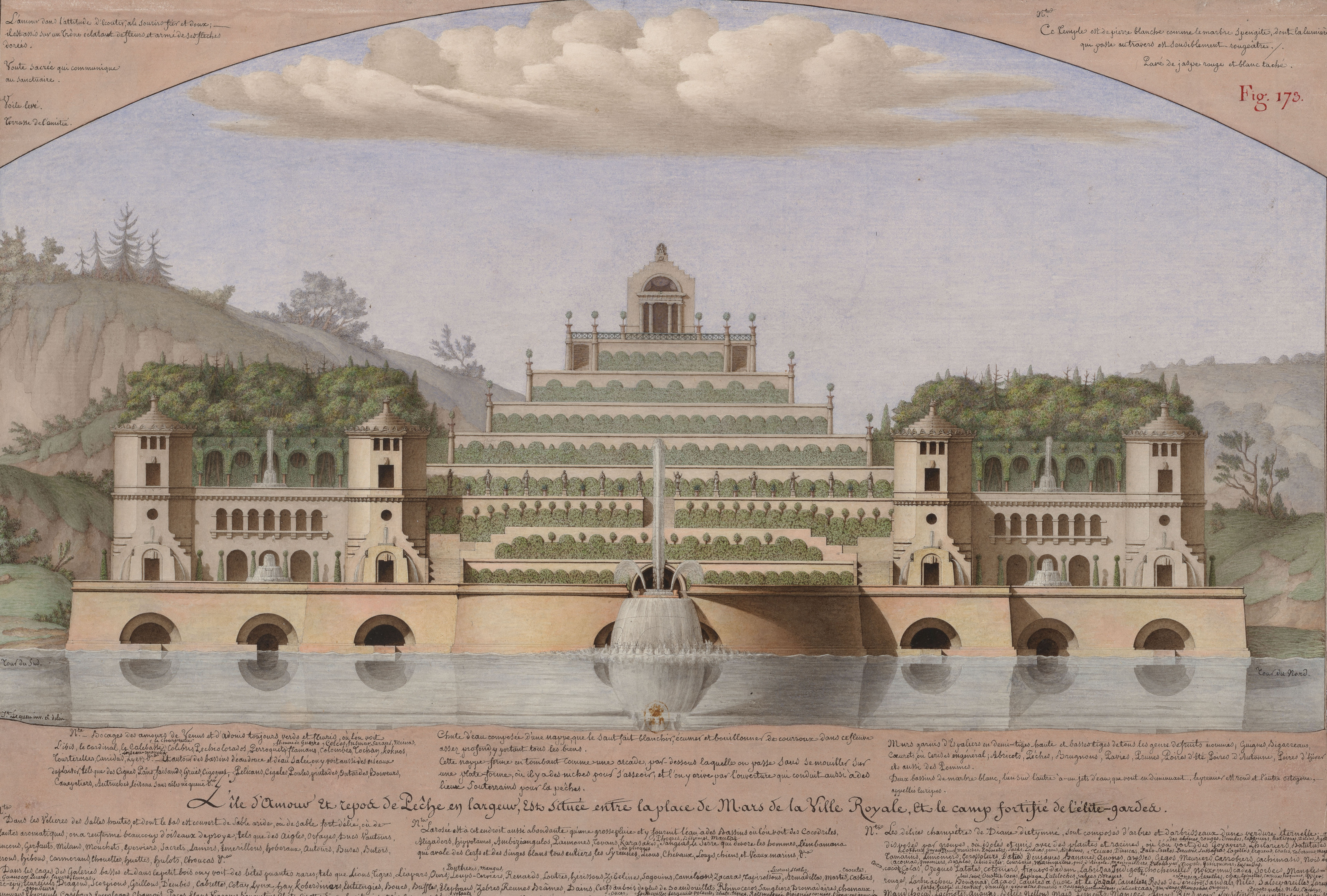
L’Île d’amour et repos de pêche. BnF, département des Estampes et de la photographie.Jean-Jacques Lequeu
BnF -

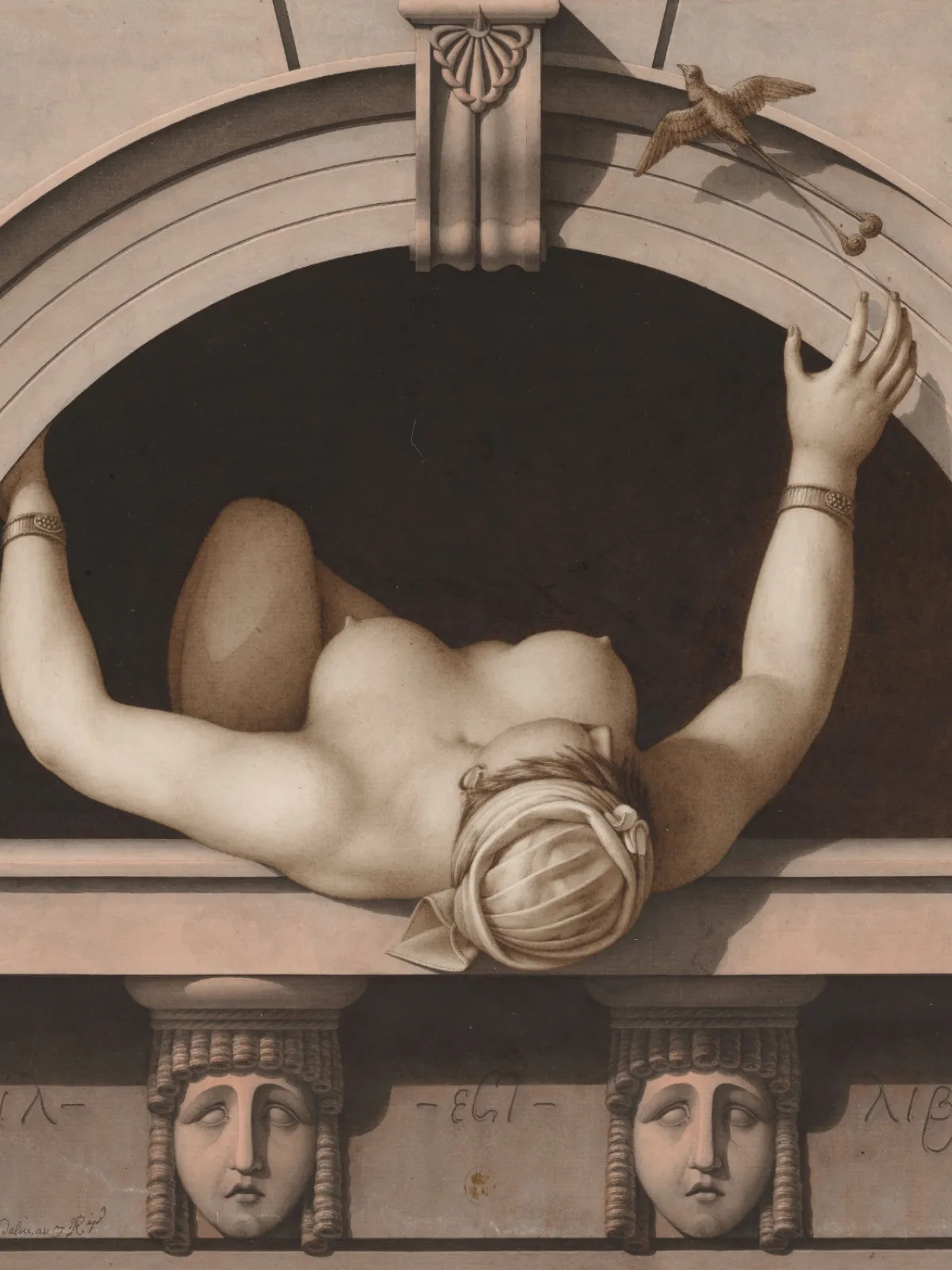
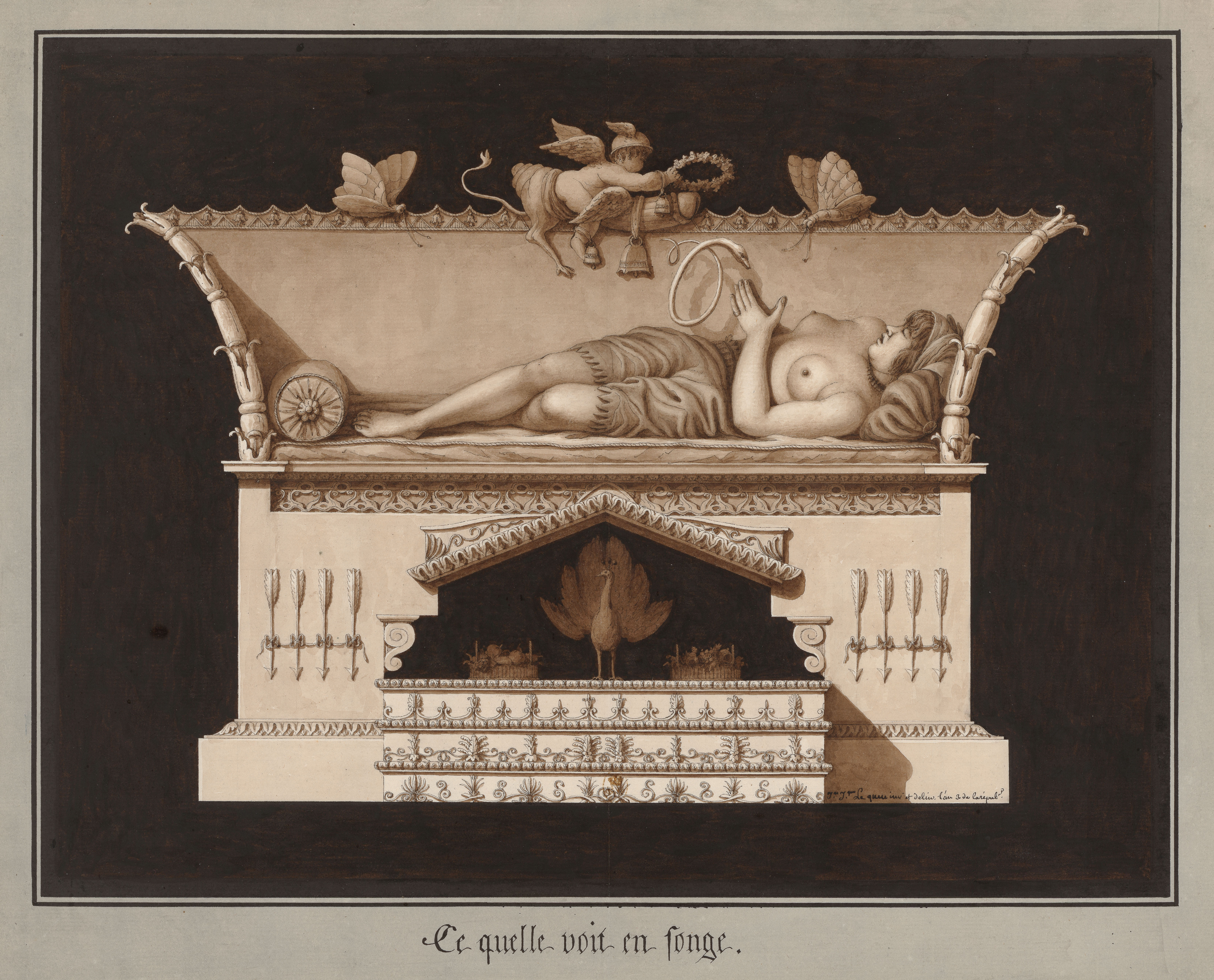
Ce qu’elle voit en songe. BnF, département des Estampes et de la photographie.Jean-Jacques Lequeu
BnF -

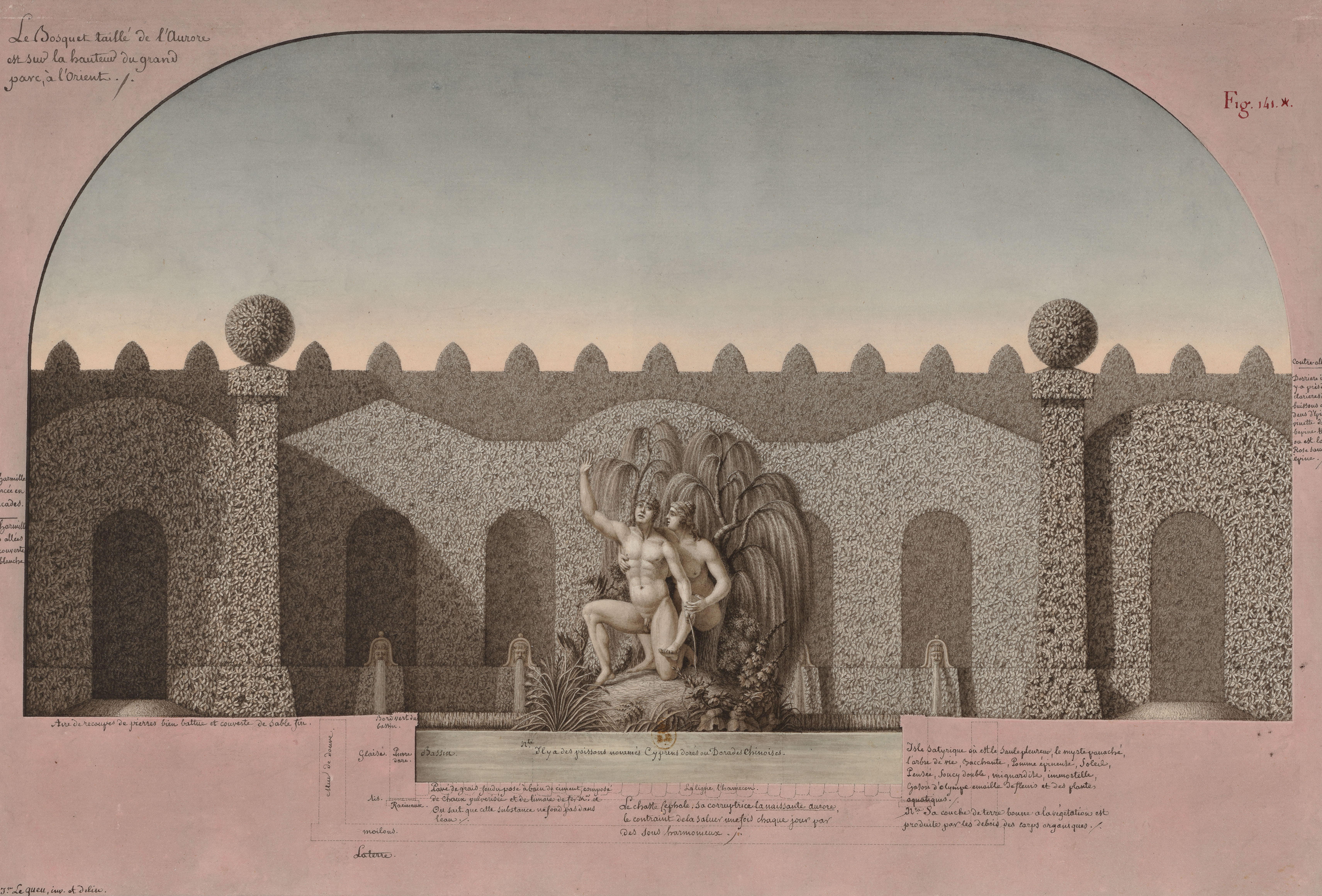
Bosquet de l’Aurore. BnF, département des Estampes et de la photographie.Jean-Jacques Lequeu
BnF -

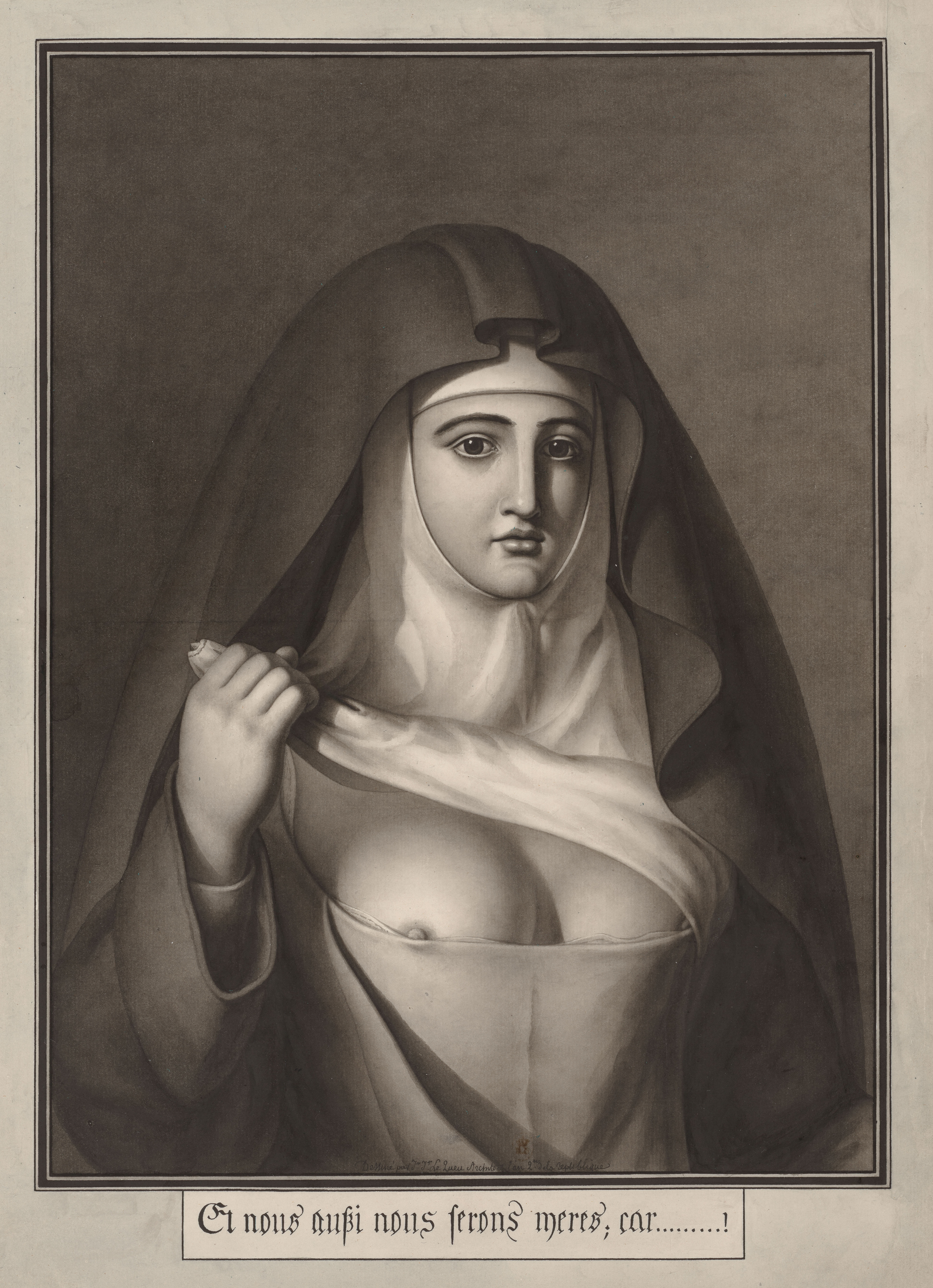
Et nous aussi nous serons mères ; car… BnF, département des Estampes et de la photographie.Jean-Jacques Lequeu
BnF
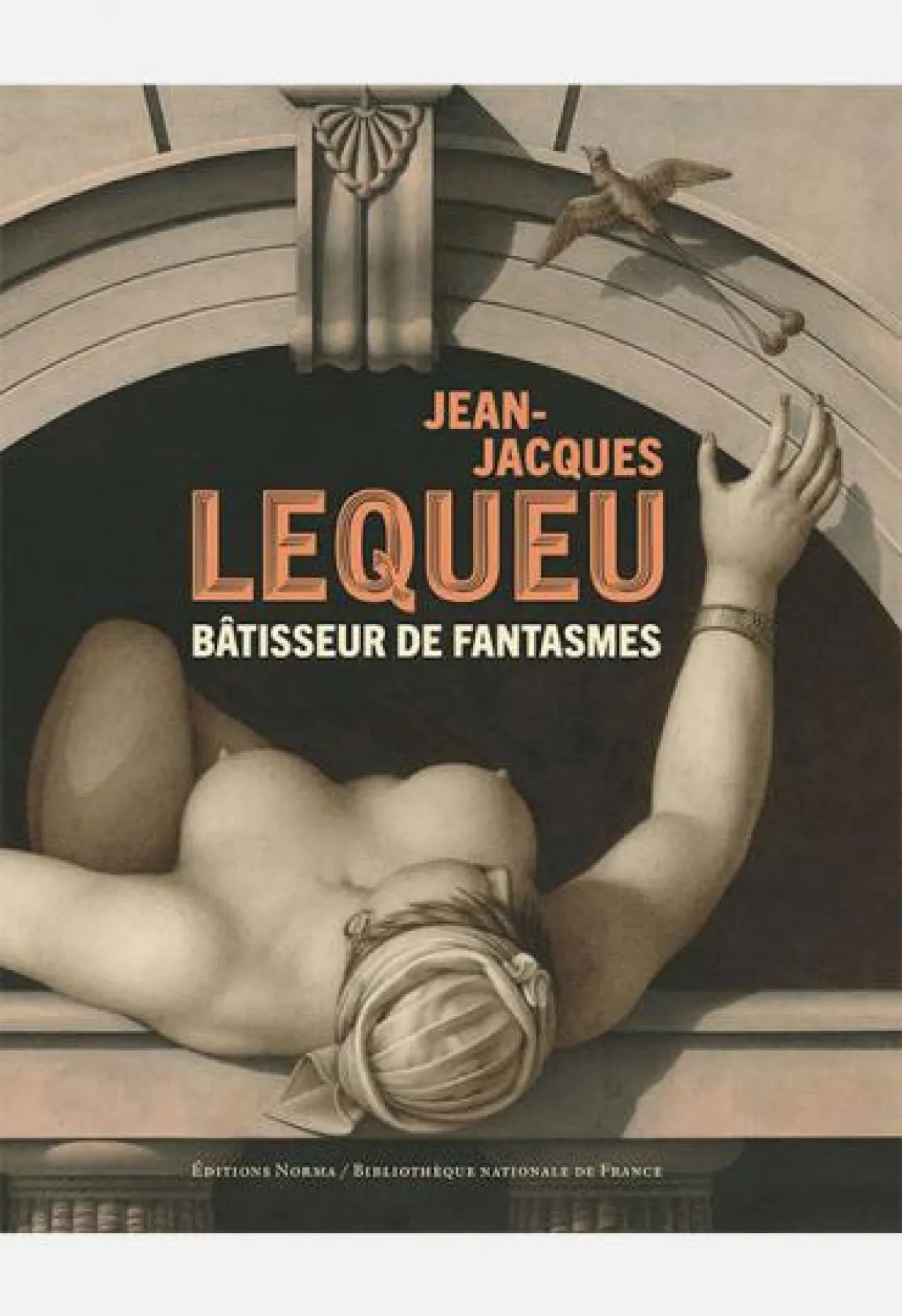
Publication
Quel lien y a-t-il entre L’Origine du monde de Gustave Courbet et le « Palais idéal » du facteur Cheval ? Selon Annie Le Brun, « il y a Jean-Jacques Lequeu, qui, sans en être conscient, pressent que l’origine du rêve architectural a quelque chose à voir avec cette origine du monde ».
Fils d’un menuisier de Rouen, Lequeu (1757-1826), formé au siècle des Lumières, voit son destin bouleversé par la Révolution. Contraint à un emploi de dessinateur pour l’administration, il croit toutefois à son talent et poursuit sans concession son ambition d’artiste.
« Architecte de papier », Lequeu rêve de monuments somptueux, de fabriques fictives et de paysages imaginaires ; au-delà de l’architecture, sa galerie s’enrichit de multiples dessins, d’une suite troublante d’autoportraits, de portraits grimaçants, de tableaux érotiques et de détails anatomiques sans complaisance. Six mois avant de disparaître dans le dénuement et l’oubli, il lègue ce fascinant œuvre graphique à la Bibliothèque royale.
Cet ouvrage présente pour la première fois Lequeu dans sa singularité comme dans son époque, restituant enfin pour un large public toute sa richesse et sa complexité.
Ouvrage publié en coédition avec la BnF.
Exposition au Petit Palais, musée des Beaux-Arts de la ville de Paris, du 11 décembre au 31 mars 2019.
Auteur(s) : Laurent Baridon, Jean-Philippe Garric, Martial Guédron, Corinne Le Bitouzé, Joëlle Raineau-Lehuédé, Annie Lebrun, Elisa Boeri, Valérie Nègre
Exposition : Jean Jacques Lequeu (1757-1826)
Format : Relié
Nombre de page : 192
Nombre d'illustration : 180
Dimensions : 22 x 28 cm
ISBN : 978-2-37666-0217
Date de publication : novembre 2018
Langue : Français
Editeur : Norma éditions et BnF éditions
Prix public : 39